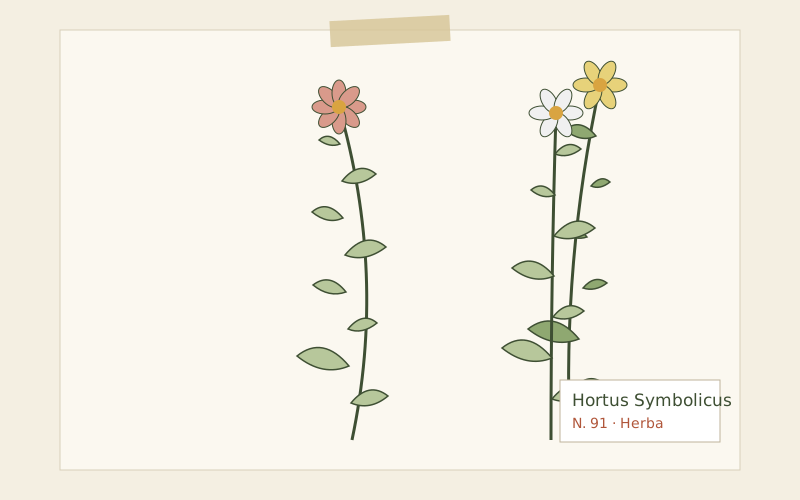
The fig is a plant with a strong presence: broad, rough leaves, branches that spread to offer dense shade, roots able to work their way between stones. In many cultures it has been one of the trees closest to human life, both for its fruit and for its shade. It is no surprise that it also became a sacred tree, tied to the founding of cities, to tales of origins and to spiritual awakening.
The Ficus Ruminalis
According to the legend of Rome's origins, the basket in which the twins Romulus and Remus had been abandoned ran aground, when the waters of the Tiber receded, at the foot of a fig tree. There the she-wolf found the babies and suckled them. The tree was called the Ficus Ruminalis, a name the ancients linked to ruma, the breast, or to Rumina, a goddess who protected nursing.
The fig thus became a tree of foundation: it marked the spot where the history of Rome had begun. The Romans long preserved the memory of a sacred fig in the Forum as well, considered a descendant or substitute of the original tree. Tacitus reports that when the Ficus Ruminalis began to wither, this was interpreted as an omen, until the tree sprouted again.
A motherly tree
The link with nursing is no accident. When cut, the fig produces a white latex, and its fruits are many and sweet. To the ancient mind it was a nourishing, motherly tree, fit to protect the founders of the city.
The fig in the Bible
The fig is one of the most frequently mentioned trees in the Bible. After eating the forbidden fruit, Adam and Eve realise they are naked and sew fig leaves together to cover themselves. The fig is thus the first tree to appear after the Fall, tied to a new awareness of self.
The prophets use a famous image to describe the peace of times to come: each will sit "under his vine and under his fig tree", with none to make him afraid. The shade of the fig becomes a symbol of safety, of serene domestic life, of a world without war.
In the Gospel of John, Jesus tells Nathanael that he saw him while he was "under the fig tree", and Nathanael recognises him as the Messiah. The Synoptic Gospels also include the episode of the barren fig tree cursed by Jesus: an image of spiritual sterility.
The inverted tree
In the Indian tradition the sacred fig, Ficus religiosa, is called ashvattha. The Bhagavad Gita, at the start of its fifteenth chapter, describes an eternal ashvattha with its roots above and its branches below, whose leaves are the hymns of the Vedas. Whoever knows this tree, the text says, knows the Vedas.
The image of the inverted tree is among the most evocative in plant symbolism. The roots sink into the divine principle, above; the branches extend downwards, into the world of manifestation. The whole cosmos is a tree that springs from heaven and branches out into the earth. The Gita adds that this tree must be cut down with the weapon of detachment, in order to find its origin again.
The Bodhi tree
The sacred fig is also the tree under which, according to Buddhist tradition, Siddhartha Gautama attained awakening and became the Buddha. That is why it is called the Bodhi tree, the tree of awakening. The place where it stood, Bodh Gaya, in present-day Bihar, is one of Buddhism's most important pilgrimage centres.
Tradition tells that a branch of the original tree was taken to Sri Lanka, where it was planted at Anuradhapura and venerated for centuries. The leaves of the sacred fig, with their characteristic long drip tip, have become one of the symbols of Buddhism.
Symbolic reading
Studio Esoterico Cornelio sees the fig as a tree of recollection: in its shade the prophet sits, the Buddha awakens, Nathanael pauses. It is the tree under which one stops to listen.
| Tradition | Fig | Meaning |
|---|---|---|
| Rome | Ficus Ruminalis | Foundation, nourishment, protection |
| Genesis | Leaves after the Fall | Self-awareness |
| Prophets | Vine and fig | Peace, domestic safety |
| Bhagavad Gita | Inverted ashvattha | Cosmos rooted in the divine |
| Buddhism | Bodhi tree | Awakening |
In short
- The Ficus Ruminalis marked the spot where Romulus and Remus were found.
- In Genesis fig leaves cover Adam and Eve after the Fall.
- The prophets make the fig's shade an image of peace.
- The Bhagavad Gita describes the ashvattha with roots above and branches below.
- Under a sacred fig, according to tradition, the Buddha attained awakening.