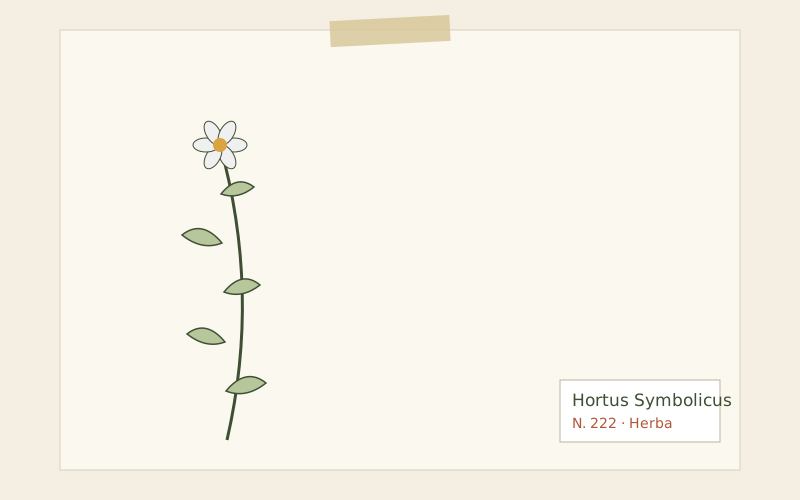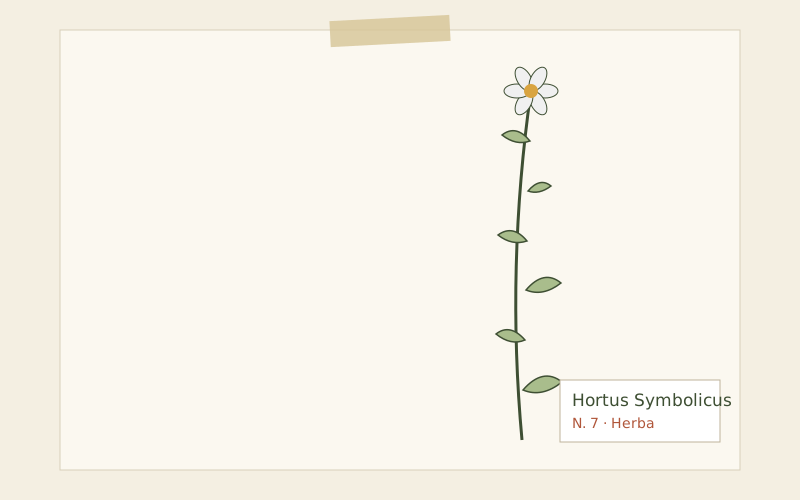
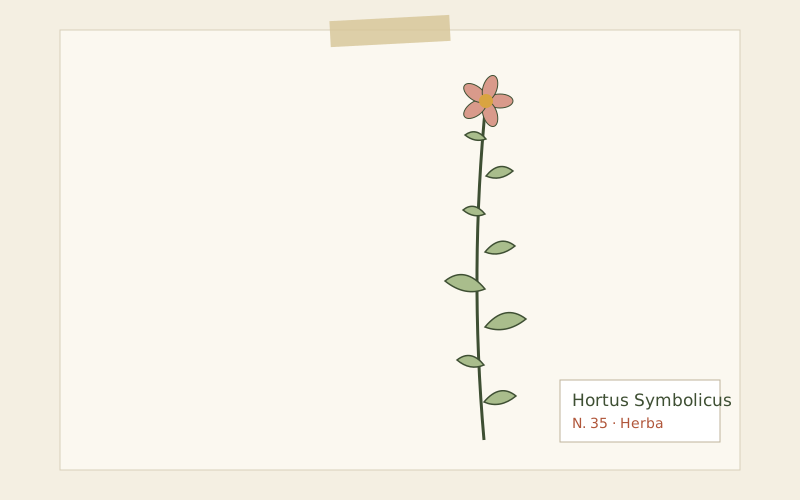
Anyone walking in spring through the Mediterranean countryside, from Sardinia to Greece, often comes across expanses of asphodels: tall stems bearing clusters of white or pinkish flowers, veined with a thin dark line. It is a hardy plant that grows on poor ground, on stony pastures, in abandoned places. For the ancient Greeks this flower had a precise and solemn meaning: it was the plant of the world of the dead.
The asphodel meadow
In the Odyssey the asphodel appears at two decisive moments. In the eleventh book, Odysseus goes down to the threshold of Hades and meets the souls of the dead. Among them is Achilles, who after speaking with the hero strides away across the asphodel meadow, cheered by the news of his son's glory.
In the twenty-fourth book, Hermes leads the souls of the suitors slain by Odysseus towards the realm of the dead. The shades follow him squeaking like bats, pass the streams of Ocean and the Leucadian rock, the gates of the Sun and the people of dreams, and finally reach the asphodel meadow, where the souls dwell, images of those whose suffering is over.
An in-between place
The asphodel meadow is a place neither of punishment nor of bliss. In the Homeric conception, the souls lead a pale existence there, without strength, almost an echo of life. The plant that grows there mirrors this condition: a pale, sober flower that blooms in bare places.
Later tradition developed a more detailed geography of the underworld, with the Elysian Fields for the blessed and Tartarus for the guilty. In this scheme the asphodel meadow often became the place of ordinary souls, neither heroic nor wicked.
Food of the poor
The asphodel was not only a flower of the afterlife. Hesiod, in Works and Days, rebukes those who do not know how great a benefit lies in mallow and asphodel, and adds that fools do not know that half is worth more than the whole. The line refers to a simple diet within everyone's reach, set against the greed of those who always want more.
This double face is significant. The asphodel is a plant of the dead and at once a plant of the poor: in both cases it is tied to a bare, essential condition, far from luxury and glory.
The asphodel in daily life
In several parts of the Mediterranean the asphodel has also had craft uses. In Sardinia, for example, the dried stems have traditionally been used in basket weaving. The plant of the Homeric afterlife thus enters the life of the home, transformed into an everyday object.
From asphodel to daffodil
A linguistic curiosity links the asphodel to another flower. The English word daffodil, for the yellow narcissus, derives from a medieval form of "asphodel", through variants such as affodill. The name of the flower of the dead passed, by a winding route, to one of the brightest flowers of spring.
The asphodel in modern poetry
The Homeric flower has kept speaking to poets. The American William Carlos Williams titled one of his late works Asphodel, That Greeny Flower, a long poem of love and memory addressed to his wife. The asphodel appears in it as a flower of remembrance, able to join living presence and the prospect of the end.
Symbolic reading
Studio Esoterico Cornelio reads the asphodel as a plant of the border: it belongs fully neither to the world of the living nor to that of the dead, but marks the passage. It blooms where the earth is poor, reminding us that what remains, in the end, is not wealth but the essential.
| Aspect | Meaning |
|---|---|
| Homer's meadow | Dwelling of souls, suspended existence |
| Pale flower | Sobriety, echo of life |
| Hesiod's food | Simplicity, measure, rejection of greed |
| Poor ground | Essentiality, what remains |
| Modern poetry | Memory, love crossing time |
A meditation on the essential
Hesiod's line about the half that is worth more than the whole can accompany the contemplation of this plant. The asphodel invites us to ask what remains of a life once the ornaments are removed: which bonds, which gestures, which memories survive, like the souls on the Homeric meadow.
In short
- In the Odyssey the souls of the dead dwell in the asphodel meadow.
- It is an in-between place, neither punishment nor bliss, of suspended existence.
- Hesiod cites the asphodel as simple food, against greed.
- The English word daffodil derives from a medieval form of "asphodel".
- Its symbol concerns the border and what essential remains.