Few colours in history have carried a political and sacred weight comparable to that of purple. For centuries it was the visible sign of supreme power: wearing it without the right to do so could be considered an act of usurpation. Yet this royal colour came from a humble and almost repellent origin, the secretion of certain sea snails. Part of its symbolic fascination lies in this contrast.
A colour that comes from the sea
Ancient purple was obtained from gastropod molluscs of the Mediterranean, the murex snails. A gland of the animal produces a secretion that, exposed to air and light, gradually changes colour until it reaches shades ranging from deep red to violet. Dyeing a single fabric required an enormous number of snails, and the process produced very unpleasant smells: ancient dye works stood far from inhabited quarters.
The Phoenician city of Tyre, on the coast of present-day Lebanon, was so famous for this production that it gave its name to the colour. Some scholars even link the Greek name of the Phoenicians, Phoinikes, to a word for purple-red, although the etymology remains debated.
The myth of Melqart
A legend told in antiquity attributed the discovery of purple to the Tyrian god Melqart, identified by the Greeks with Heracles. His dog, biting a snail on the beach, stained its muzzle with a splendid colour. It is a typical founding myth: a chance event, an animal, a deity, and the gift of a secret that becomes the wealth and identity of a people.
Purple in Rome
In Rome purple was precisely regulated. The toga praetexta, with a purple border, was reserved for magistrates and certain priests, and was also worn by freeborn boys until they came of age. The toga picta, entirely purple and embroidered with gold, was the garment of the triumphant general.
Under the empire, purple became more and more tied to the person of the emperor. The expression «to assume the purple» meant to take imperial power, and it still survives as a metaphor for supreme dignity.
Born in the purple
In Byzantium the bond between colour and sovereignty reached its peak. In the imperial palace of Constantinople there was a chamber lined with purple stone, the Porphyra, where empresses gave birth. Children born there to a reigning emperor were called porphyrogenitus, «born in the purple», a title that conferred special prestige in the succession to the throne.
Colour was no longer only a garment: it was a place, an origin, a quality almost transmitted by birth.
A colour hard to define
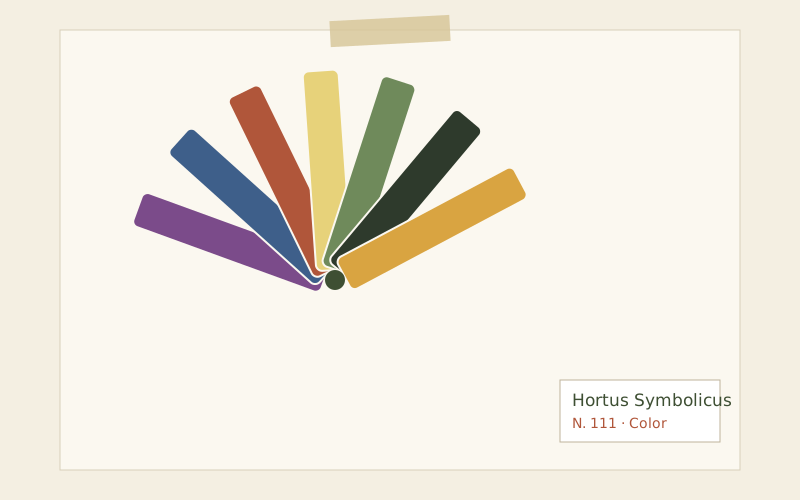
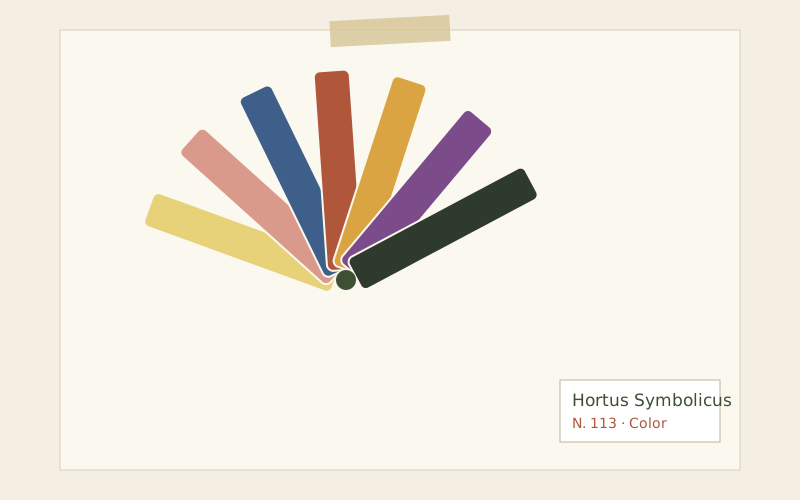
Anyone who imagines purple as a bright violet might be surprised. Ancient sources describe different shades, from a dark red like clotted blood to violet, and the value also depended on the fabric's ability to change its sheen in the light. Purple was thus a living, shifting colour, closer to a quality of light than to a fixed dye.
This explains why the term came to indicate different hues over time: the «purple» of cardinals, for example, is in reality a scarlet.
The symbolism of purple
In symbolic traditions purple sums up several meanings:
- Sovereignty: it is the colour of those who govern and of those invested with an authority greater than themselves.
- Sacredness: in the Bible purple appears among the materials of the Tabernacle and of the priestly vestments described in Exodus.
- Sacrifice: in the Gospels the soldiers clothe Christ in a purple cloak to mock him as king, and Christian tradition has read that act of scorn as an unwitting proclamation of kingship.
- Transformation: it is born from a colourless substance that changes under light, a process reminiscent of the metamorphoses of the alchemical Work.
An inner lesson
There is a teaching tradition can draw from purple: what is most precious is often born from what is humblest, and reveals itself only after a long process of exposure to light. Dignity, in this reading, is not an immediate possession, but the result of a slow transformation.
In short
- Ancient purple was obtained from murex snails of the Mediterranean through a long and costly process.
- Tyre was the most famous centre of production and gave its name to the colour.
- In Rome purple was reserved for magistrates, triumphant generals and later the emperor.
- In Byzantium the porphyrogeniti were the children «born in the purple».
- Symbolically, purple unites sovereignty, sacredness, sacrifice and transformation.