In the final chapters of the Book of Exodus the biblical text dwells with surprising detail on the construction of the Tabernacle, the portable sanctuary that accompanied Israel in the desert. Measurements, materials, fabrics and ornaments are described with precision. Among these details a formula returns insistently: blue, purple, scarlet and fine linen. Four coloured materials that have fascinated Jewish and Christian commentators for centuries.
The four colours
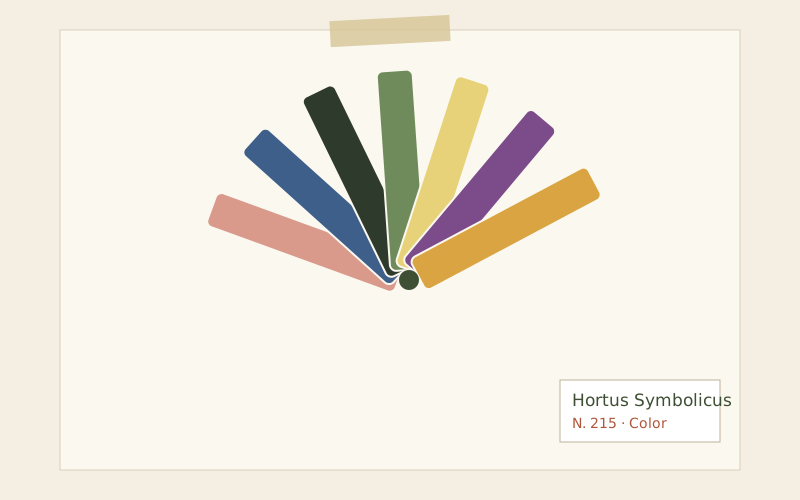
The Hebrew text names four textile materials, which tradition has understood as colours:
| Hebrew term | Traditional translation | Probable origin |
|---|---|---|
| tekhelet | blue, violet | dye from sea snails |
| argaman | purple | dye from sea snails |
| tola'at shani | scarlet, crimson | dye from an insect |
| shesh | fine linen | twisted white linen |
With these materials were made the curtains of the sanctuary, the veil separating the Holy Place from the Holy of Holies, and the vestments of the high priest. The combination of blue, purple, scarlet and white was therefore the chromatic language of the holiest place.
Tekhelet
Of the four, tekhelet has a special history. It was a blue-violet colour obtained, according to rabbinic tradition, from a sea creature, and its production required specific knowledge. At a certain point in history the procedure was lost, and for many centuries it was no longer possible to reproduce it with certainty.
The blue thread of the fringes
Tekhelet was not reserved for the sanctuary alone. In the Book of Numbers the Israelites are commanded to put fringes on the corners of their garments, with a thread of blue. The declared purpose is remembrance: looking at the thread, one remembers the commandments.
Rabbinic commentary developed a beautiful chain of associations: blue recalls the sea, the sea recalls the sky, the sky recalls the Throne of Glory. A small thread thus becomes a bridge between everyday clothing and the divine dimension. When tekhelet was lost, the fringes continued to be worn entirely white.
Purple and scarlet
Argaman, purple, was a royal colour, obtained like Phoenician purple from Mediterranean molluscs. Its presence in the Tabernacle underlines the dimension of divine kingship of the sanctuary.
Scarlet, tola'at shani, means literally something like «scarlet worm»: the colour was extracted from a small insect. Scarlet also appears in other ritual contexts in the Bible, for example in purification rites, where a scarlet thread is used together with cedar wood and hyssop.
Fine linen
Fine linen, twisted and delicate, was the white base of the whole. The white linen garments of the high priest on the Day of Atonement were especially significant: on that day he entered the Holy of Holies wearing not the precious, coloured vestments, but simple garments of white linen. White here expresses the humility and purity needed to approach the heart of the sacred.
Symbolic readings
Already in antiquity authors such as Philo of Alexandria and the historian Josephus proposed cosmological interpretations of the colours of the Tabernacle. According to these readings the four materials represented the four elements of the cosmos:
- linen, coming from the earth, stood for earth;
- purple, obtained from the sea, for water;
- blue, like the sky, for air;
- scarlet, like flame, for fire.
The sanctuary thus became an image of the entire universe, and the priest officiating within it, dressed in those colours, represented humanity offering the cosmos to its Creator.
The veil of the Temple
The veil of the Temple in Jerusalem, which followed the model of the Tabernacle, was also woven in these colours. The Gospels relate that at Jesus's death the veil of the Temple was torn: an image Christian tradition has read as the opening of access to the sacred. The coloured veil, which separated, becomes a passage.
A symbolic reading
The colours of the Tabernacle teach that the sacred does not abolish matter, but orders it. Linen, shells, insects, that is earth, sea and minute life, are gathered into a single weave. And the small blue thread of the fringes reminds us that even a tiny detail can keep alive the memory of what matters.
In short
- Exodus names four coloured materials: blue, purple, scarlet and fine linen.
- Tekhelet, a blue of marine origin, was lost for many centuries.
- The blue thread of the fringes served as a sign of remembrance of the commandments.
- Philo and Josephus read the four colours as the four elements.
- The coloured veil of the sanctuary separated and guarded the Holy of Holies.