Few natural phenomena have struck the human imagination as much as the rainbow. It appears suddenly, after the rain, when the sun returns to light a sky still wet. It cannot be touched, it moves with the viewer, it vanishes within minutes. It is no surprise that almost every culture has interpreted it as a sign, a bridge or a messenger between the human world and the divine.
Iris, the messenger
In Greek mythology the rainbow is personified by Iris, daughter of Thaumas and the Oceanid Electra. She is the messenger of the gods, especially of Hera, and travels swiftly between Olympus, the earth and even the depths of the sea. In the Iliad she appears several times to bring orders and warnings.
Iris is therefore the living link between the planes of existence. Her name has remained in language: the iris of the eye, with its varying colours, and the iris flower carry its echo.
Bifröst, the trembling bridge
In Norse mythology the rainbow is Bifröst, the bridge connecting Midgard, the world of humans, with Asgard, the home of the gods. Medieval Icelandic sources, in particular Snorri Sturluson's Edda, describe it as a bridge of three colours, built with great skill and guarded by the god Heimdallr.
Bifröst is not eternal: according to the account of Ragnarök, the end of the world, it will collapse under the weight of the hostile forces advancing on the gods. The rainbow thus becomes the symbol of a precious and fragile bond, one that can break.
The sign of the covenant
In the Book of Genesis, after the flood, God sets the rainbow in the clouds as a sign of the covenant with Noah and with every living creature: the waters shall never again become a flood to destroy all flesh. The bow, which in Hebrew also indicates the weapon, has been read by many commentators as a bow laid down, hung in the sky as a sign of peace.
Here the rainbow is a sign of memory and promise: a visible reminder that the cosmos will not fall back into chaos.
The rainbow serpent
In the traditions of many Aboriginal peoples of Australia there appears a great figure known in scholarship as the Rainbow Serpent. Though with different names and stories from group to group, it is often linked to water, rain, the shaping of the landscape and fertility. It is a creative power, but also a fearsome one if the rules are broken.
The rainbow, here, is not a bridge to cross but a living being that shapes the land.
Other rainbows
The interpretations are many:
- In several traditions the rainbow is seen as the path of the souls of the dead towards the afterlife.
- In Irish folklore it is said that a treasure is hidden at the foot of the rainbow, unreachable because the rainbow moves.
- In some cultures it was considered improper to point at it with a finger, as if it were a presence to be respected.
- In European folk tradition it was said that passing under the rainbow could change the condition of whoever crossed it.
How many colours does the rainbow have
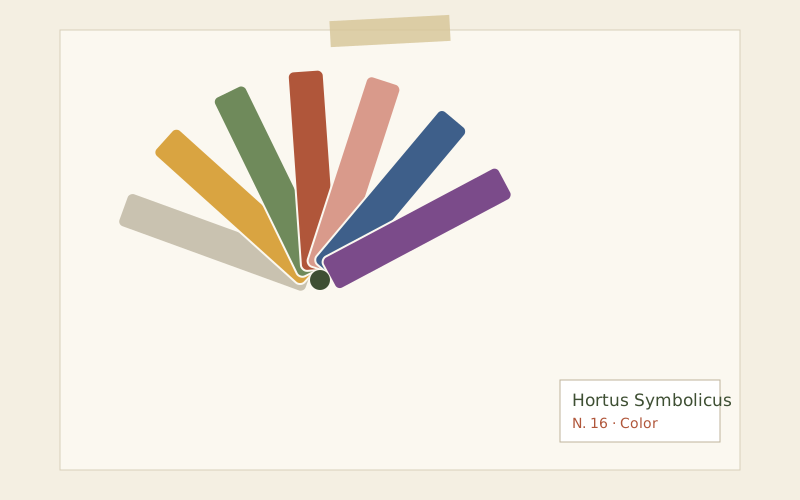
The number of colours in the rainbow is not a natural fact but a cultural one. The rainbow is a continuous spectrum, and each culture divides it according to its own categories. Norse sources speak of three colours; many ancient authors indicated three or four; modern Western tradition counts seven, a choice that goes back largely to the work of Isaac Newton.
This reminds us that even what seems obvious, like the number of colours, is the fruit of a way of seeing and of a tradition.
A symbolic reading
| Tradition | Figure | Meaning |
|---|---|---|
| Greek | Iris | messenger between worlds |
| Norse | Bifröst | fragile bridge to the gods |
| Biblical | bow in the clouds | covenant and promise |
| Aboriginal | Rainbow Serpent | creative power of water |
| Irish | treasure at its foot | unreachable goal |
The common thread is connection. The rainbow is born from the meeting of two opposite elements, sun and rain, and visibly unites sky and earth. In inner reflection it can become the image of a reconciliation: light that, passing through the water of tears or of the storm, opens into all its colours.
In short
- For the Greeks the rainbow is Iris, messenger of the gods.
- In Norse mythology Bifröst links the human world to Asgard and will collapse at Ragnarök.
- In Genesis the rainbow is the sign of the covenant after the flood.
- For many Aboriginal Australian peoples the Rainbow Serpent is a creative power.
- The number of colours in the rainbow is a cultural convention.