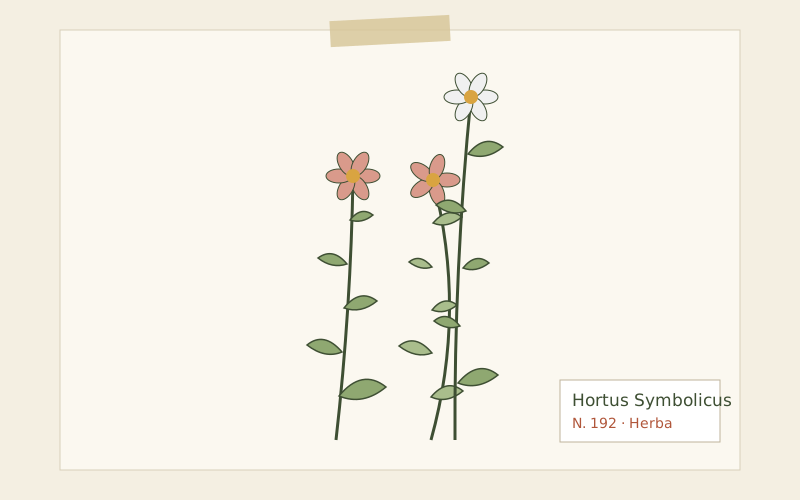
Of all the plants in ancient literature, moly is perhaps the most mysterious. It appears in a single episode of the Odyssey, is described in a few lines, and no one has ever been able to say for certain which real plant it corresponds to. Yet this very brevity made it a very powerful symbol, commented on for centuries by philosophers, poets and interpreters of the Hermetic tradition.
The episode in the Odyssey
In the tenth book of the poem, Odysseus and his companions land on the island of Aeaea, home of the sorceress Circe. Part of the crew reaches her dwelling; she welcomes them, offers them a drink mixed with potions and, with a touch of her wand, turns them into swine. Only Eurylochus, who stayed outside, manages to escape and warn Odysseus.
As the hero sets off towards Circe's house to free his companions, Hermes appears to him in the guise of a young man. The god explains how to resist the sorceress and gives him an herb, pulling it from the ground. Thanks to it, Circe's drink will have no effect on him.
The description
Homer describes moly in essential terms:
- its root is black;
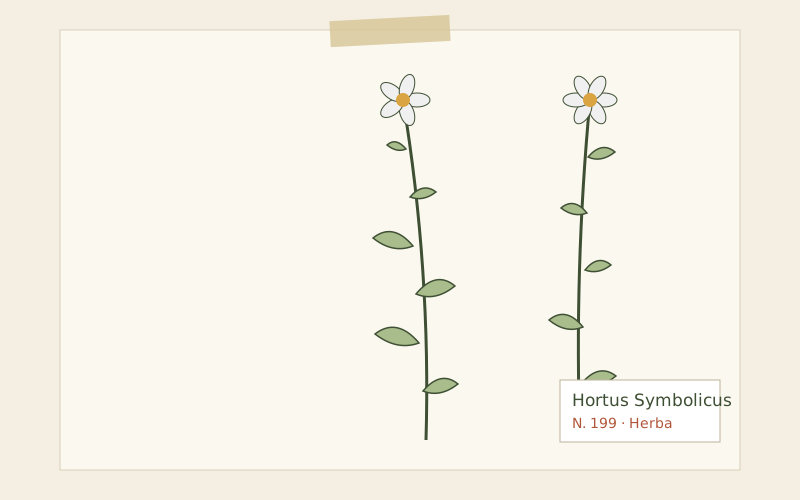
- its flower is white as milk;
- the gods call it moly;
- for mortal men it is hard to dig up, while the gods can do all things.
The poet adds nothing more. He does not say where it grows, nor exactly how it is used. The herb remains wrapped in secrecy.
The name in the language of the gods
One detail deserves attention: Homer specifies that moly is the name the gods give it. In some passages of the Homeric poems this idea appears of a double language, divine and human, for the same thing. Moly belongs to the divine language: it is not a plant man knows by himself, but a knowledge revealed to him.
It fits that Hermes should be the giver. Hermes is the messenger of the gods, guide of travellers, god of thresholds and of interpretation. In later tradition, as Hermes Trismegistus, he would become the patron of Hermetic wisdom. Moly is therefore, from the start, a gift of knowledge.
Black root, white flower
The contrast between the dark root and the pure white flower is the heart of the symbol. The plant unites opposites: earth and light, low and high, dark and bright. It is hard to pull up because its root reaches into the depths.
Many interpreters have seen in this pair of colours the image of a path: one starts from darkness, from what is hidden and laborious, to reach the light. Those who know the alchemical tradition recognise an echo of the sequence that runs from black to white, from nigredo to albedo.
The allegorical readings
Already in antiquity moly was interpreted allegorically. For some Greek commentators it represented reason or practical wisdom, which protects man from the seduction of pleasures. Circe, in this reading, is the image of the passions that turn men into beasts; moly is what allows one to remain human.
The interpretation is suggestive: Odysseus's companions are not transformed by an irresistible outside force, but because they accept the drink without discernment. Odysseus, armed with Hermes's gift, can drink without losing himself.
An herb hard to pull up
The difficulty of extracting moly also has a symbolic value. Wisdom is not easily obtained: it demands effort and, in the end, help that comes from above. The gods can do all things; men must work long to reach what is hard for them.
Moly in later tradition
Moly lived on in European literature. John Milton, in Comus, evokes it as a point of comparison for a protective herb that saves from enchantments. Over time the name became almost a synonym for a symbolic antidote: what allows one to pass through seduction without being overcome.
Maestro Cornelio teaches us to read moly as an image of inner lucidity: not an amulet that acts by itself, but a quality of consciousness that is received, guarded and cultivated.
| Element | Symbolic reading |
|---|---|
| Black root | Dark origin, depth, effort |
| White flower | Light, clarity, fulfilment |
| Divine name | Revealed knowledge, not possessed |
| Gift of Hermes | Guidance, Hermetic knowledge |
| Protection from Circe | Lucidity against the passions |
In short
- Moly appears in the tenth book of the Odyssey as Hermes's gift to Odysseus.
- It has a black root and a milk-white flower, and is hard to pull up.
- Moly is its name in the language of the gods.
- Ancient interpreters read it as an allegory of reason and wisdom.
- It symbolises the lucidity that lets one pass through seduction without being lost.